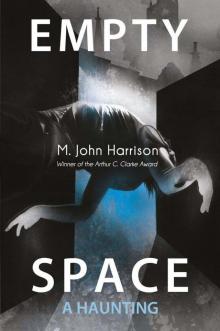
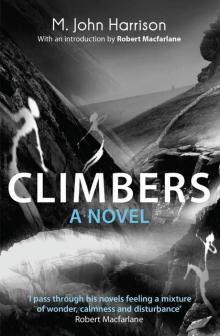
Wish i was here, p.1
Wish I Was Here, page 1


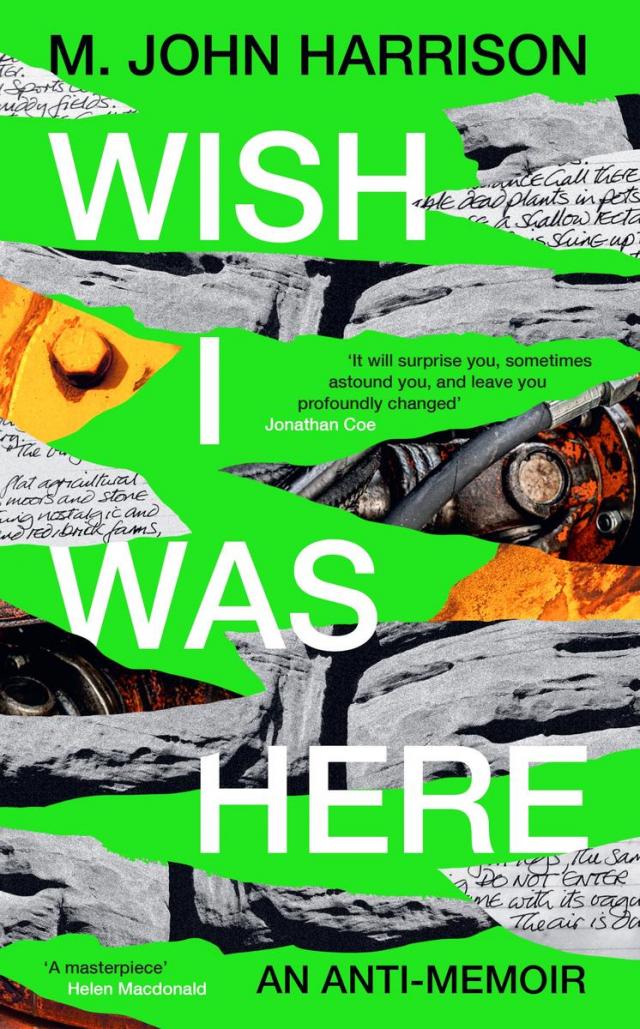
For everyone who couldn’t think what to say
Yesterday upon the stair
I met a man who wasn’t there
—Anon
Contents
Title Page
Dedication
Epigraph
ONE: Losing It
nowtbooks (1)
seven layers of car cellulose
who is the Map Boy?
steerage way
letter from an uncle
a fantasy in five volumes
dream states
I was so much older then
ten years into a wrong decision
write all night, walk all day
the imaginary country
peak experience: a ghost story
you know you will never be the same again
TWO: Understanding Maps
‘learning to write in a new way’
a character in your own fiction
three characters I might like to read or write about
back to the old haunts
defamiliarising the territory
the real, the weird & the evidently written
worldbuilding
settings, places, heritage landscapes
edging into disaster: the end of everything
sci-fi: the questions which should concern us all
lost & found: repression, abjection & the storage of self
blocked
THREE: Collision Avoidance
my secret garden
a quiet morning in Barnes
the cat
seasons of South London
unmapped areas
a step too far
when I first came here
in the house of mist
getting back into it
landscapes of the heart
FOUR: The Fall Line
magic & loss
a thick patina or glaze
nowtbooks (2)
Map Boy & the unstored self
anti-nostalgic
these items
late style
who needs books
Epilogue
Also by M. John Harrison
Copyright
ONE
Losing It
nowtbooks (1)
When I was younger I thought writing should be the struggle with what you are. Now I think it’s the struggle to find out who you were.
There are people who learn to dissociate early – to orbit whatever is happening to them without taking part. By late adolescence, we’re rarely losing height, let alone touching down. Memory never quite works for us. Our distance from events is already too great. I soon discovered that writing things down helps less to close that distance than you’d think. But notes make good source material, and when you keep notebooks they eventually begin to suggest something. About what, is not clear. But something, about something.
I liked a notebook spiral-bound: it was easier to police. I couldn’t bear hasty scribble, interlinears, strike-through, muddle. If I thought of a better sentence, I was compelled to tear out the whole page and begin again. I wanted the notes to be notes: I also wanted them to be pristine, finished, absolutely articulate little gems. Soon I was keeping two sets of accounts, the rough and the smooth, the instant and the perfected. Some notes didn’t seem worth the effort of polishing. These I labelled ‘nowts’, experiencing a vague resentment if ever I caught sight of them again. In the mid 1980s they would be transferred laboriously into their own computer files: dumped. Years after you have abandoned it, a note like that takes on a new, often uneasy semblance of life. The file is as warm to the touch as the radioactive container at the end of Robert Aldrich’s 1955 film Kiss Me Deadly: lift the lid and you could swear you hear, in a voice composed of both a whisper and a roar, the continuous repetition of a word.
Obviously there’s the fear of failing to remember, the fear of the loss of this or that detail, the fear that you’ll forget what you were shopping for. All of that is exactly what you’d expect. But the additional – the real – fear behind notebooking, the fear these fears disguise, is the fear of not having seen in the first place; and in that sense, keeping a notebook quickly becomes the act of seeing in itself. A note, or it never happened. A note, or you didn’t look. So write this down before it goes: a stag’s antlers imagined at the end of the garden, at the end of the day, among the browning leaves of last year’s iris! Write this: sand. Write this: a lacquer box. Write this: ‘Bought, contents unseen.’ And this: ‘Some birds viewed from a distance.’ Write that their wings are as flat as planks when they turn against the sky. Write that Friday approaches and recedes but it’s never where you are.
Warm air, sunshine, rowan blossom like a confectioner’s shop, and further off, the junkman’s wonky bugle call.
Write a note, or this sunshine never fell through this window on to this minor, unnoticed, unreviewed event. A note, in a notebook, has this exact air of desperation to it. It invites yet refutes the act of reclamation.
Today I thought I might describe every single step of the staircase, every crack, flaw and grain in the oak as if it were a landscape. But if I can’t describe what’s outside the window – the way the winter sunshine falls on houses half a mile away while the High Street lies in shadow – how can I attempt something that much more complex? Close up, as far as language is concerned, the stairs exist off the edge of resolution, they are both the largest & the smallest structure in the universe.
I continue to be an observer who was never much good at observation, stuck with a means of communication which can’t carry enough information. Hence the constant retreat to metaphor. The attempt to push through into something else is always a failed attempt to be in the real. Metaphor is giving up too soon. There is also the question of what the superposition at the heart of any metaphor actually offers the reader. Push an analogy hard enough & it will break down; but metaphors just continue to point at something which never really claimed to be there, or be definable, in the first place. I love metaphor, and I wouldn’t be without it; it’s only that, every so often, a fifteen-year-old self of mine sits in a room in Warwickshire in 1960 and regrets it cannot use words to photograph & pass on to the reader the exact way the smoke rises from a cigarette.
Bear with me. I’m exploring some territory here. I’m looking for a password. My life built itself around guesses, moments of capture and hypnosis, things that never happen. To start with, these moments had a curious similarity in tone. They were equally distanced and unthreatening, as if it wasn’t actually me who was experiencing them. In a way, it wasn’t. The person who experienced them came later. My mistake was to think of him as me, as the identity I had constructed by living my life, by writing notes and then by writing notes about notes. By then I had an identity all right. But that’s another story. All anxieties contain their own mirrors, and you’re always looking for some space to inhabit between the two.
seven layers of car cellulose
I’m old enough to remember things that happened around 1949, although they are mostly about the weather and building sites. I don’t remember myself at that age, only the things I looked at. Puddles. Careful stacks of building materials. Sacks of sand. I don’t have a narrative of those places or of myself in relation to them; I’m careful not to retrofit them with one. They weren’t in cities, or even, really, in towns. They weren’t bomb sites. They were nothing colourful. I wasn’t drawn to them, I already lived there. They were brand new greenbelt housing in the Midlands, on the perimeters of which the builders were still at work. They weren’t sites of fantasy or escape. The objects in them were fascinating because they were the objects of those places. Or they were intrinsically interesting, on a day-to-day basis, because of some quality such as being transparent. Or frozen. Or yellow. Or having moved since I last saw them.
Half-built estate, somewhere in the Midlands. The frozen puddle from which the water seems to have evaporated, leaving ice on top of air. Later in the year a stile, and a narrow pathway between hedges! A dream about walking on the flat green water of a canal. (I remember looking down from a bridge, at the canal stretching away into the distance – water on the left, a path and narrow lawns with trees on the right. Sunshine and shade. In the dream the water’s right at the level of the path, so that they form a single continuous surface. By the time I was twenty and came to write it down I’d forgotten all this except as flashes, glimpses, nothing that could be labelled or withstand analysis.) I also have an image of playing with wooden building blocks, faded grainy blue, orange and brown, and from the same period nightmares featuring a train with a coloured dragon emerging from its chimney instead of smoke. With some of these dreams I associate the distant sound of shunting engines deep in the night; and a separate leaden buzzing noise – apprehended as both a taste and a smell – that I used later as an index of the uncanny in stories about an invented country. I’m not trying to remember anything. I’m hoping that what remains forgotten is still affecting what I think.
Competent or not, the other four-year-olds were aggressively in charge of themselves: they did up their own coats. I let an adult do mine, so I could remain preoccupied by the colour of the buttons or stare into a pond, bemused by the way there seemed to be more clarity in the water than in the air. I would lodge easily in the moment, fail to move on: by eleven I could imagine myself grown up, but only as someone who, reaching an undefined gate-level, had flipped into a completely novel state.
In the front room we had a radiogram and three shelves of books. I remember A Little Brother to the Bear, The Water Babies and The Coral Island. Most of the rest were popular military histories. World War II was still very alive in the house: my father had The White Rabbit; memoirs of Operation Market Garden; biographies of General Montgomery, one of his heroes. He was so taken with Montgomery that his friends called him ‘Monty’. I always wondered if the nickname originated with them, or whether it was my father who insisted on being called that. To do him justice, it was probably the former, and he may not have welcomed it to start with. But there he was, nearly a decade after the war had ended: ‘Monty’ Harrison, with his TA membership & a .303 Lee Enfield in a canvas case on top of the wardrobe. Polishing the family shoes was as a result of this a six-process affair which took up all of a Saturday morning. Polish the shoes. Polish the brass, and during Bob a Job Week when I was a Cub, polish other people’s brass too. I didn’t mind that because it got me off the estate and into the bigger, older houses, the ones with the chased Benares brass occasional tables and the Labrador dogs. The calmness of those houses, and at the same time their sense of liveliness, made me want to have been born into that class, not my own, whatever it was.
The rest of my father’s heroes being engineers, there were engineering biographies too. Rolt’s Isambard Kingdom Brunel, an expensive birthday present from him to me, I was allowed to read only under supervision. I didn’t mind. I found it lacked the sadistic punch of The White Rabbit & the calming qualities of A Little Brother to the Bear. My father’s record collection was small, we listened to a lot of Chopin. The first record I ever bought, a 78 of Lonnie Donegan’s ‘Rock Island Line’, had to be played while he was out; when he caught me dancing to it he was confused & angry. He did have a Gerry Mulligan single. Listening to Mulligan’s contemplative account of ‘Moonlight in Vermont’, I remember not my father but McClintic Sphere, the saxophonist in Thomas Pynchon’s second novel, V. I know it’s wrong to equate Mulligan and Sphere: Pynchon clearly based Sphere on Ornette Coleman. But it’s Sphere at the V-note I remember first, & only then, behind him, his opposite, the partial shadow of my father. & behind him, the shadow not of the big V but of the big C that took him off when I was thirteen. One way or another, we children never got to the funeral. We were glad then, or I was. It was a relief then, not to have to go, but the outcome was that everything to do with his death ended up distanced and blurred. I could forget it. I could forget most of what he represented to me.
Lost in February, fourteen years old. Full of energy but never knowing what to do. Go to the canal, go down the fields, always looking for some way of saying the thing you don’t know what it is, pulled and pushed everywhere by the dry, cold wind. Distraught, dismayed by the beauty of frozen things, also thin dust chipped with hail. Towpaths, cigarette smoke, a blonde aunt, hundreds of contemporary poems ripped whole from the school library, a bleached canvas curtain across an outside door. How do you know what to say before you know how to say it? Why does everyone who says anything say it better than you? Adulthood would happen to me, but not because of me. Unlike my friends I had put in place no strategy for achieving it. Meanwhile the parents and teachers panic. I am intelligent but if I don’t connect I can only end up, as they say, digging ditches. I react to this as an imposition. Swear to become more articulate than them.
These memories aren’t Proustian. They are hardly even memories. They are more like glitch art or soft errors – vague unhelpful frissons, flashes of recognition in which the real object remains hidden. The memory is not what you remember: the memory lies further down, or away, or whatever. One of the more distinct memories I have is of an oval pool situated in open pasture & surrounded by trees. A willow sagged across the water. You could crawl out ten or twelve feet to where the trunk had split and flattened so that it offered itself like open hands, and lie there in a kind of green daze staring down into clear water full of tiny little fish. You could spend hours there hoping to see something larger. I was always anxious walking across the fields to the pond, yet hypnotically relaxed once I got out along the willow trunk. Meanwhile, two or three miles away out near the Portland Cement Works, there was another pool, huge and shallow, poisonous with rust and full of discarded machinery from the nearby works. I only ever went there the once. I was so disturbed by it I dream about it even now. They’re decommissioning Hinckley-A power station as I write this. I believe the turbines there came from English Electric where my father worked, and that he was a contracts engineer on that job. It’s a belief, not a memory. In another memory my brother is shooting a moorhen then discovering its newly hatched chicks, which he tried to foster in a shoebox. They died. He was devastated but that didn’t stop him bringing back a hare and inviting our mother to jug it. By then I was playing truant in the afternoons to be incompetent around other people’s horses. What was going on with us? Our rural connections were tenuous, already a generation away.
Not many schools in those days offered an O Level in Aeronautics: ours did. I wanted to be a pilot though I was officially too stupid. Everyone was making model aeroplanes. Their fathers taught them how to apply seven layers of car cellulose lifted from the assembly plants along the Coventry Road, rubbing down between coats. They soon had the knack. Those aeroplanes shone like a new Hillman. Mine, though lumpy at more scales than one, nevertheless flew. ‘That’s not flying,’ people told me, ‘you can fly a brick if you put enough engines on it.’ Sound advice. But every day since then I’ve perfected my aerodynamics a little further and flown off, remaining deferred, unavailable.
Fifteen or sixteen, I began spending time in the public library. I never felt I belonged there, any more than I belonged anywhere else. Luckily it was empty during the day. That’s where its unique selling point lay. It smelled of floor polish and no one bothered you. You were left to follow the shelves like disused railway lines, leading towards what? Something to read, anyway. You heard very little. No one came near. If you couldn’t be down by the Oxford Canal, the library seemed like the calmest, least anxiety-ridden space in which to hide. For an hour or so it could be yours. Of course, the books themselves became spaces. I think that’s always an error, to allow yourself to regard a book as having an interior, as being a world rather than a written thing.
No one could have been more angry, or more confused. Successful truanting had made me feel invisible; invisibility had become my project. A Sunday afternoon, 1962. Autumn. Seventeen years old, I stood directionless at the side of the Lutterworth Road in the rain. I stuck out my thumb. I was facing north. In two hours not a single vehicle stopped, but as soon as I crossed the road and faced back the way I had come, they were queuing up to take me home. Not long after, I got a job in a fox-hunting stable a few miles up the A5. Seven pounds a week. Shovelling horseshit was the nearest thing I could find to digging those ditches. With my first pay I bought objects I hoped would define me. A ‘Dutch’ blanket, an ashtray with horses on it; a Ronson cigarette lighter. I was dying to be someone but I didn’t know how. It was the first of many performed fictions of leaving, & of the secondary self who would later become known to me as Map Boy.
who is the Map Boy?
He’s a lifetime drama of escape, of an ultimate truancy. He might be you, he might be me. He has his dreams; they might be mine. He might be a visitor from the past or, more likely, the future. He might be ‘a product of his environment’. He might be a sign that nothing can be taken seriously. His origin story varies. His attitude is loose & hybrid; but pedagogic. His favourite reading is The Wind in the Willows or maybe it’s The Naked Lunch. ‘If we’re to talk about memoir,’ the Map Boy says, ‘this is how the story goes. And also how it doesn’t go. This is the vitrine but you won’t be able to see much in there.’ He says a life is not so much a cabinet of curiosities as The Cabinet of Dr Caligari, tap the glass and everything rearranges itself.
Map Boy builds a full-size caravan from the scaled-up plans of a model. He travels round Britain in the caravan for a decade, with a dog, doing agricultural work. When the dog dies he buries it in the wood, and makes for it out of Horsham stone a monument like a low curved wall, where it rests for twelve months before badgers & foxes dig it up & eat it. Map Boy haunts the wood. He shifts easily between its layers of time. He knows where everything is, he knows what you can eat; there are endless ways you can make a fire. He won’t get another dog. All around him, Coulsdon is haemorrhaging its Jaguars into the surrounding tissues of Redhill, Reigate and Dorking, which flush and bruise suddenly under the strain.